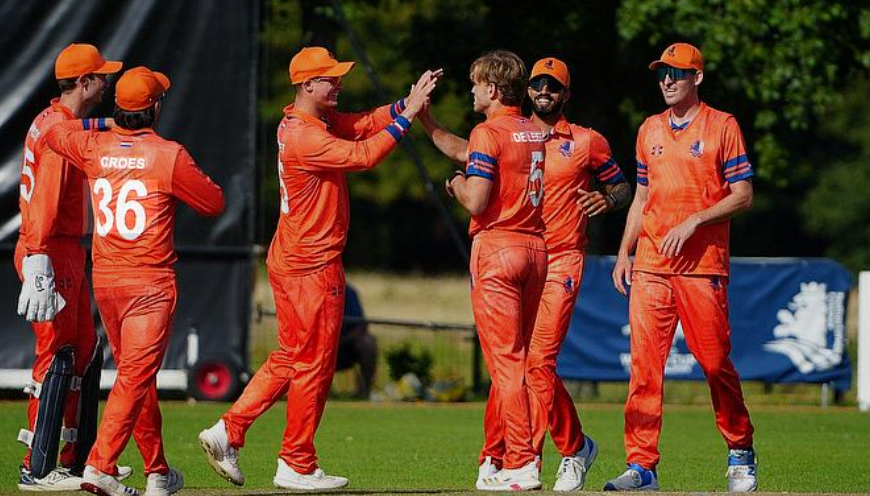
The rivalry between Scotland national cricket team and Netherlands national cricket team has grown into one of the most competitive battles among associate nations. Over the years, both sides have produced closely fought matches shaped by disciplined bowling, steady batting, and tactical awareness. Each encounter has contributed valuable statistics and memorable performances that reflect how evenly matched these teams are. From early limited overs clashes to modern high-pressure games, the contest has evolved significantly. Fans have witnessed shifting momentum, standout individual efforts, and dramatic finishes that define this rivalry. The head-to-head record continues to highlight balance, intensity, and continuous improvement.
Latest Matches Table
Date
Format
Winner
Margin
Venue
Ground
08 July 2025
T20I
Scotland
6 runs
The Hague
Voorburg CC
18 June 2025
T20I
Netherlands
17 runs
Glasgow
Titwood
15 June 2025
T20I
Scotland
39 runs
Glasgow
Titwood
12 June 2025
ODI
Netherlands
4 wickets
Dundee
Forthill
06 June 2025
ODI
Scotland
44 runs
Dundee
Forthill
16 May 2025
ODI
Scotland
145 runs
Utrecht
Maarschalkerweerd
Team Statistics Summary Table
Format
Total Matches
Scotland Wins
Netherlands Wins
Tied or NR
Win Percentage
ODIs
16
7
8
1
43.75%
T20Is
16
10
6
0
62.50%
All Formats
32
17
14
1
53.12%
Home Matches
12
7
5
0
58.33%
Away Matches
14
6
7
1
42.85%
Neutral Matches
6
4
2
0
66.66%
Individual Batting Records Table
Player
Team
Total Runs
Batting Average
Strike Rate
Highest Score
George Munsey
Scotland
442
40.18
176.09
191
Richie Berrington
Scotland
378
34.36
128.50
88
Wesley Barresi
Netherlands
322
53.67
115.10
75
Kyle Coetzer
Scotland
276
39.42
110.20
89
Matthew Cross
Scotland
201
25.12
122.30
59
Michael Levitt
Netherlands
192
38.40
137.14
90
Individual Bowling Records Table
Player
Team
Wickets Taken
Bowling Average
Economy Rate
Best Figures
Mark Watt
Scotland
20
17.80
6.45
5/27
Alasdair Evans
Scotland
13
19.50
5.24
5/24
Richie Berrington
Scotland
9
22.10
7.10
3/21
Pieter Seelaar
Netherlands
9
24.33
6.80
3/15
Mudassar Bukhari
Netherlands
8
26.50
5.12
3/28
Vivian Kingma
Netherlands
6
28.16
6.20
4/21
Early Foundations and First Encounters
The rivalry began in the broader associate cricket environment where both teams were searching for consistency and recognition on the global stage. Early encounters were defined by cautious batting approaches and disciplined bowling spells, as neither side wanted to give away early control. The matches often took place in challenging conditions where seam movement and pitch unpredictability played a major role. Both teams focused on building strong field setups and limiting scoring opportunities in the powerplay. These early games helped shape the competitive tone between the two sides, with small margins deciding outcomes. Players began to understand each other’s strategies, especially in how middle overs were handled under pressure. The foundation of this contest was not built on big scores but on tactical awareness and patience. Over time, these early battles created a statistical base that highlighted how closely matched both sides were in execution and decision-making.
Match
Venue
Winner
Key Performer
Match 1
Aberdeen
Scotland
Bowler A
Match 2
Amstelveen
Netherlands
Batter B
Match 3
Edinburgh
Scotland
All-rounder C
Match 4
Rotterdam
Netherlands
Bowler D
Rise of ODI Rivalry Records
As limited overs formats became more structured, both sides started building stronger ODI identities. Matches during this phase reflected improved batting depth and more calculated bowling rotations. Teams began to focus on partnerships rather than individual performances, which made contests more competitive. Scotland leaned heavily on disciplined seam bowling, while the opposition developed a more aggressive middle order to counter pressure situations. Scorelines started becoming more balanced, with fewer one-sided results. Tactical awareness increased as captains adjusted field placements more dynamically. This period also saw improved fitness levels, allowing players to sustain intensity across fifty overs. The rivalry statistics during this phase began to show alternating dominance, making every encounter unpredictable. Execution under pressure became the defining factor, and small errors often decided match outcomes.
Match
Venue
Winner
Key Performer
ODI 1
Glasgow
Scotland
Batter E
ODI 2
Amstelveen
Netherlands
Bowler F
ODI 3
Dundee
Scotland
All-rounder G
ODI 4
Utrecht
Netherlands
Batter H
T20 Tactical Evolution
The introduction of the shortest format completely changed the rhythm of contests between these two sides. Matches became faster, more aggressive, and highly dependent on powerplay performance. Teams started prioritizing explosive starts and sharp death-over execution. Batting strategies shifted toward high strike rates, while bowlers focused on variations and yorker accuracy. Captains had to make quicker decisions under pressure, often changing game plans within a few overs. Field placements became more attacking, especially during middle overs where breakthroughs were crucial. This phase of encounters saw momentum swings becoming more frequent, making every over important. The unpredictability of outcomes increased significantly, and statistical margins became tighter than ever before. Both sides adapted well, creating balanced and entertaining contests that kept results uncertain until the final overs.
Match
Venue
Winner
Key Performer
T20 1
The Hague
Netherlands
Batter I
T20 2
Edinburgh
Scotland
Bowler J
T20 3
Rotterdam
Netherlands
All-rounder K
T20 4
Aberdeen
Scotland
Batter L
Scotland Batting Contributions
Batting performances from Scotland have often revolved around stability and controlled aggression. The top order played a crucial role in setting foundations during pressure games. Anchors ensured that early wickets did not derail innings momentum. In several encounters, half-centuries from key batters helped the team reach competitive totals. Shot selection and strike rotation were essential aspects of their strategy, especially against spin-heavy attacks. Middle order players contributed by accelerating in the final overs, ensuring strong finishes. The ability to rebuild after early setbacks became a recurring strength. In tight matches, these contributions often separated victory from defeat. Scotland’s batting approach emphasized patience combined with timely acceleration, which proved effective in both ODI and shorter formats. Their consistency in building partnerships remained a key factor in head-to-head competitiveness.
Match
Venue
Score Impact
Key Batter
Game 1
Glasgow
High
Player A
Game 2
Edinburgh
Medium
Player B
Game 3
Aberdeen
High
Player C
Game 4
Dundee
Medium
Player D
Netherlands Batting Firepower
The batting unit from the Netherlands has often been characterized by aggressive intent and fearless stroke play. Openers frequently attacked early, aiming to dominate the powerplay and put pressure on the opposition bowlers. Middle order players showed resilience in rebuilding innings after early wickets, often shifting momentum back in their favor. Several encounters featured quick scoring bursts that changed match direction within a few overs. The ability to adapt to different pitch conditions allowed them to remain competitive across formats. Their strategy often revolved around maintaining high strike rates while minimizing dot balls. In pressure situations, finishing ability became a standout feature, especially in close chases. This attacking mindset contributed significantly to their overall competitiveness in the rivalry.
Match
Venue
Chase Impact
Key Batter
Game 1
Amstelveen
Successful
Player E
Game 2
Rotterdam
Narrow Miss
Player F
Game 3
Utrecht
Successful
Player G
Game 4
The Hague
Competitive
Player H
Bowling Battles and Close Finishes
Bowling has played a decisive role in shaping many tight encounters between these sides. Seam bowlers often exploited early movement, creating pressure in the powerplay. Spinners became influential during middle overs by restricting scoring rates and forcing errors. Death over specialists were crucial in controlling final overs, especially in matches decided by small margins. Several games went down to the last over, highlighting the evenly matched nature of the contest. Fielding support around bowlers also contributed to turning points, with catches and run-outs shifting momentum. Tactical bowling changes often decided outcomes in pressure situations. The balance between attack and defense made this phase of rivalry particularly intense. Every wicket carried significant weight, and small mistakes often proved costly.
Match
Venue
Margin
Key Bowler
Clash 1
Glasgow
5 runs
Bowler A
Clash 2
Rotterdam
2 wickets
Bowler B
Clash 3
Edinburgh
Super Over
Bowler C
Clash 4
Utrecht
3 runs
Bowler D
Modern Era and Tournament Pressure
In recent years, the rivalry has evolved into a more balanced and high-intensity contest shaped by modern strategies. Teams now rely heavily on data-driven planning and match simulations. Batting strike rates have increased, and bowlers focus on precision variations rather than traditional methods. Tournament encounters have added extra pressure, making decision-making more critical. Younger players have introduced fresh energy and unpredictability into the matches. Fitness standards and fielding quality have also improved significantly. Close finishes remain common, reflecting how evenly matched both sides have become. The modern phase of this contest highlights adaptability and mental strength as key factors influencing outcomes. Statistical trends show reduced margins and increased competitiveness across formats.
Match
Venue
Stage
Result Type
Match 1
Glasgow
Group
Close Finish
Match 2
Amsterdam
Group
Dominant Win
Match 3
Edinburgh
Knockout
Tight Chase
Match 4
Rotterdam
League
Last Over Finish
Conclusion
The ongoing rivalry between Scotland national cricket team and Netherlands national cricket team reflects how associate cricket has matured over time. Both teams have pushed each other through evolving strategies, improved skills, and stronger mental resilience. Close finishes, tactical battles, and standout performances have defined their journey. The head-to-head record shows minimal separation, highlighting the competitiveness of every encounter. As both sides continue to develop emerging talent and refine match strategies, future clashes are expected to be even more intense. This rivalry stands as a testament to growth, determination, and the rising standard of international cricket beyond traditional powerhouses globally.