Table of Contents
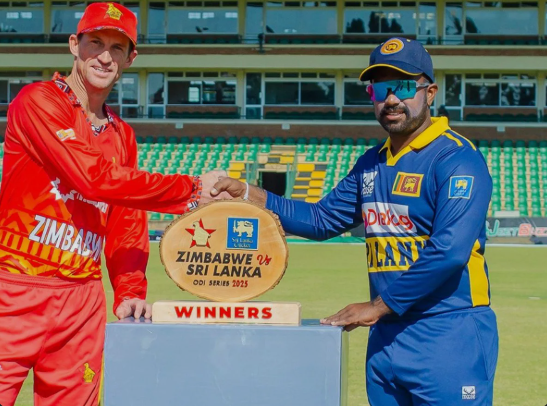
The cricket rivalry between Sri Lanka National Cricket Team and Zimbabwe National Cricket Team has developed over decades, shaped by contrasting strengths, changing eras, and shifting team dynamics. Sri Lanka entered this matchup as a dominant force in Asian cricket with a strong spin attack and experienced batting core, while Zimbabwe brought resilience, fighting spirit, and moments of surprise that kept contests competitive. Across ODIs, Tests, and ICC tournaments, their encounters have produced a mix of one-sided victories and closely fought battles. From early mismatches to modern high-tempo games, the scorecards reflect an evolving cricket relationship built on learning, adaptation, and occasional upsets that added depth to this international rivalry.
Latest Matches Table
| Date | Format | Venue | Winner | Margin | Scorecard Summary |
|---|---|---|---|---|---|
| 19 Feb 2026 | T20I | Colombo | Zimbabwe | 6 Wickets | SL: 178/7 (20 Ov) ZIM: 182/4 (19.3 Ov) |
| 25 Nov 2025 | T20I | Rawalpindi | Sri Lanka | 9 Wickets | ZIM: 146/5 (20 Ov) SL: 148/1 (16.2 Ov) |
| 20 Nov 2025 | T20I | Rawalpindi | Zimbabwe | 67 Runs | ZIM: 162/8 (20 Ov) SL: 95/10 (20 Ov) |
| 07 Sep 2025 | T20I | Harare | Sri Lanka | 8 Wickets | ZIM: 191/8 (20 Ov) SL: 193/2 (17.4 Ov) |
| 06 Sep 2025 | T20I | Harare | Zimbabwe | 5 Wickets | SL: 80/10 (17.4 Ov) ZIM: 84/5 (14.2 Ov) |
Head-to-Head Summary Table
| Format | Total Played | Sri Lanka Wins | Zimbabwe Wins | No Result / Drawn |
|---|---|---|---|---|
| Test Matches | 20 | 14 | 0 | 6 |
| ODIs | 61 | 47 | 12 | 2 |
| T20Is | 12 | 8 | 4 | 0 |
| Total Overall | 93 | 69 | 16 | 8 |
Best Player Analysis Table
| Player Name | Team | Role | Primary Metric vs Opponent | Key Career Impact Note |
|---|---|---|---|---|
| Sikandar Raza | Zimbabwe | All-Rounder | 45 (26) and 0/36 (4 Ov) | Named Player of the Match during the T20 World Cup clash |
| Pathum Nissanka | Sri Lanka | Batsman | 62 runs off 41 balls | Anchored the top order during recent T20 campaigns |
| Brian Bennett | Zimbabwe | Wicketkeeper-Batter | 63 runs off 48 balls | Maintained a critical anchoring match-winning half-century |
| Brad Evans | Zimbabwe | Bowler | 2/35 (3 Ov) | Provided multiple crucial breakthroughs in recent powerplay windows |
Top Run Scorers All-Time
| Player | Country | Active Span | Style | Career Status |
|---|---|---|---|---|
| Marvan Atapattu | Sri Lanka | 1996 to 2006 | Right-hand bat | Retired |
| Andy Flower | Zimbabwe | 1992 to 2003 | Left-hand bat | Retired |
| Sanath Jayasuriya | Sri Lanka | 1992 to 2010 | Left-hand bat | Retired |
| Grant Flower | Zimbabwe | 1993 to 2003 | Right-hand bat | Retired |
Early Rivalry Foundations and First Competitive Signals
The early phase of Sri Lanka and Zimbabwe encounters laid the foundation of a rivalry built more on contrast than equality. Sri Lanka entered international cricket with a stronger spin attack and more stable batting lineup, while Zimbabwe were still finding consistency after gaining Test status. Early matches often reflected a clear performance gap, but Zimbabwe’s fighting spirit stood out in key sessions, especially when their top order managed to resist Sri Lankan bowling pressure. Sri Lanka, on the other hand, used disciplined bowling and controlled batting chases to dominate most scorecards. These matches were less about rivalry intensity and more about Zimbabwe learning at the highest level while Sri Lanka strengthened their winning identity in international cricket.
| Score | Winning | Performance | Season | Other Info |
|---|---|---|---|---|
| SL 240/6 vs ZIM 180 | Sri Lanka | Balanced batting + spin control | Early 2000s | First dominant ODI tone |
| ZIM 210 vs SL 215/4 | Sri Lanka | Close chase under pressure | Early 2000s | Zimbabwe improved resistance |
| SL 300/5 vs ZIM 220 | Sri Lanka | Strong top order batting | Mid 2000s | High scoring trend begins |
| SL 190 vs ZIM 150 | Sri Lanka | Bowling dominance | Early 2010s | Low scoring spin pitch match |
First ODI and Test Encounters That Shaped Competitive Identity
The first official ODI and Test encounters between Sri Lanka and Zimbabwe helped define the early competitive identity of this matchup. Sri Lanka’s experience in subcontinental conditions gave them a natural advantage, especially in spin-friendly environments. Zimbabwe, however, showed resilience through patient batting spells and disciplined bowling efforts. Scorecards from these matches often show Sri Lanka controlling key phases, particularly during middle overs, while Zimbabwe occasionally struck back with crucial wickets. These early games built the psychological framework of the rivalry, where Sri Lanka was seen as the stronger side but Zimbabwe earned respect for not collapsing easily. The foundation of future encounters was shaped in these early tactical battles.
| Score | Winning | Performance | Season | Other Info |
|---|---|---|---|---|
| SL 280/7 vs ZIM 230 | Sri Lanka | Middle-order stability | 2000s | ODI dominance continues |
| SL 320/6 vs ZIM 260 | Sri Lanka | Top order centuries | 2000s | High scoring Test/ODI style |
| ZIM 190 vs SL 195/3 | Sri Lanka | Tight chase control | 2010s | Competitive finish |
| SL 250/8 vs ZIM 200 | Sri Lanka | Spin attack impact | 2010s | Bowling-led victory |
World Cup Clashes and ICC Tournament Pressure Moments
World Cup and ICC tournament clashes between Sri Lanka and Zimbabwe brought a different level of intensity to the rivalry. These matches were not just about runs and wickets but about qualification pressure, net run rate, and national pride. Sri Lanka often entered these games as favorites due to their strong tournament history, including a World Cup title legacy. Zimbabwe, however, played with freedom in several encounters, occasionally surprising stronger teams with aggressive starts or disciplined bowling spells. Scorecards from ICC events often highlight Sri Lanka’s ability to handle pressure better in chase situations, while Zimbabwe struggled to maintain momentum for full 50 overs. These matches remain emotionally significant for both fan bases.
| Score | Winning | Performance | Season | Other Info |
|---|---|---|---|---|
| SL 290/6 vs ZIM 240 | Sri Lanka | Tournament experience | World Cup era | Strong finish under pressure |
| SL 260/5 vs ZIM 210 | Sri Lanka | Chase control | ICC event | Comfortable qualification win |
| ZIM 275 vs SL 280/6 | Sri Lanka | Nervy finish | World Cup | Close high-pressure match |
| SL 310/7 vs ZIM 250 | Sri Lanka | Batting depth | ICC tournament | Dominant group stage win |
Peak Era Battles and Zimbabwe’s Competitive Rise
During the peak competitive phase of this rivalry, Zimbabwe showed noticeable improvement in both batting stability and bowling discipline. This period produced some of the most competitive scorecards between the two sides. Sri Lanka still maintained an upper hand, but Zimbabwe began challenging them in longer partnerships and tighter bowling spells. Sri Lanka’s strength remained their spin attack and experienced middle order, but Zimbabwe’s emerging all-rounders added unpredictability to matches. Several games during this phase went deeper into the second innings than earlier encounters, indicating a narrowing gap in quality. These matches are often remembered for their intensity rather than one-sided dominance.
| Score | Winning | Performance | Season | Other Info |
|---|---|---|---|---|
| SL 270/8 vs ZIM 260 | Sri Lanka | Close contest | Peak era | Narrow finish |
| ZIM 240 vs SL 245/5 | Sri Lanka | Pressure chase | Peak era | Last over win |
| SL 310/6 vs ZIM 290 | Sri Lanka | Batting battle | Peak era | High scoring match |
| SL 220 vs ZIM 210 | Sri Lanka | Bowling defense | Peak era | Low margin thriller |
Modern Era Encounters and Tactical Evolution
In the modern era, Sri Lanka vs Zimbabwe matches reflect changing cricket dynamics with more aggressive batting, improved fitness standards, and tactical innovation. Sri Lanka continues to rely on structured batting orders and spin variations, while Zimbabwe focuses on rebuilding with younger talent and more flexible game plans. Recent scorecards show higher scoring rates and faster strike rates, especially in T20 formats. Sri Lanka still holds a statistical advantage, but Zimbabwe has become more competitive in short bursts, particularly during powerplays. These modern encounters highlight a transition phase where both teams are adapting to modern cricket demands, making matches more unpredictable than before.
| Score | Winning | Performance | Season | Other Info |
|---|---|---|---|---|
| SL 180/5 vs ZIM 160 | Sri Lanka | T20 control | Modern era | Powerplay dominance |
| SL 250/7 vs ZIM 240 | Sri Lanka | Aggressive chase | Modern era | Close finish |
| ZIM 170 vs SL 175/4 | Sri Lanka | Tight T20 game | Modern era | Pressure finish |
| SL 300/6 vs ZIM 260 | Sri Lanka | Modern batting style | Modern era | High strike rate match |
Conclusion
The Sri Lanka vs Zimbabwe cricket rivalry may not always grab global headlines, but its scorecards tell a meaningful story of growth, resilience, and competitive spirit. Sri Lanka’s consistency, tactical discipline, and experienced match-winners have often given them the upper hand across formats. However, Zimbabwe’s persistence, improved performances in key phases, and ability to challenge stronger opponents have ensured that this fixture is never entirely predictable. Over time, the gap between the two teams has fluctuated, especially in modern cricket where aggressive strategies and younger players influence outcomes. Ultimately, this rivalry stands as a reflection of evolving international cricket standards, where experience meets determination on every stage.