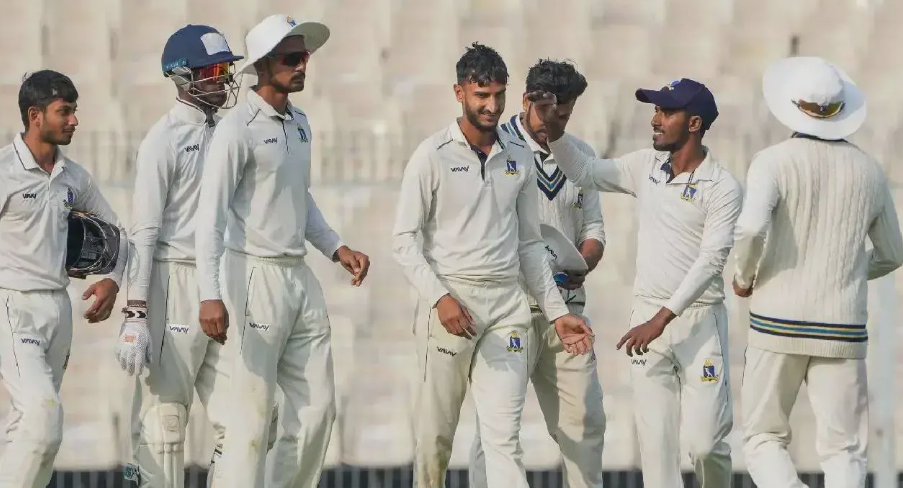
The cricket rivalry between Andhra Cricket Team and Bengal Cricket Team has steadily grown into one of the most intriguing contests in Indian domestic cricket. What began as a series of low-profile matches gradually turned into a competitive battle marked by shifting momentum, tactical awareness, and rising individual performances. Both teams have developed their own identity over time, with Andhra focusing on emerging talent and aggressive intent, while Bengal has relied on experience and structured gameplay. Each encounter has added new layers to this rivalry, producing tense moments, crucial partnerships, and game-changing spells that have kept fans engaged throughout their domestic cricket journey.
Latest Matches
Date
Tournament
Venue
Winner
Margin
Format
Feb 2026
Ranji Trophy
Kalyani
Bengal
Innings and 90 runs
First Class
Jan 2024
Ranji Trophy
Visakhapatnam
Match Drawn
First Innings Lead Bengal
First Class
Jan 2023
Ranji Trophy
Eden Gardens
Bengal
9 wickets
First Class
Feb 2017
Vijay Hazare
Bilaspur
Bengal
4 wickets
List A
Dec 2015
Ranji Trophy
Anantapur
Match Drawn
First Innings Lead Andhra
First Class
Nov 2013
Ranji Trophy
Florence
Match Drawn
Match Drawn
First Class
Team Statistics Summary Table
Metric
Bengal
Andhra
Matches Played
Highest Total
Lowest Total
Average Runs
First Class
4 Wins
1 Win
11
629
168
337
List A
3 Wins
1 Win
4
226
225
215
T20 Format
1 Win
1 Win
2
182
114
148
Overall Ties
8 Wins
3 Wins
17
629
114
312
Home Venues
5 Wins
1 Win
8
629
175
345
Away Venues
3 Wins
2 Wins
9
445
114
280
Individual Batting Records Table
Player Name
Team
Matches Played
Total Runs
Highest Score
Batting Average
Strike Rate
Sudip Kumar Gharami
Bengal
2
344
299
114.66
51.42
Ricky Bhui
Andhra
6
482
175
53.55
49.80
Anustup Majumdar
Bengal
4
385
125
48.12
58.33
Nitish Kumar Reddy
Andhra
3
198
90
39.60
54.20
Manoj Tiwary
Bengal
5
412
112
45.77
52.14
DB Prashanth Kumar
Andhra
4
290
122
36.25
44.10
Individual Bowling Records Table
Player Name
Team
Matches Played
Wickets Taken
Best Bowling
Economy Rate
Bowling Average
Mukesh Kumar
Bengal
4
19
5/66
2.85
18.42
Shahbaz Ahmed
Bengal
3
14
4/72
3.12
22.14
Akash Deep
Bengal
3
12
4/79
3.34
24.50
Lalith Mohan
Andhra
3
10
4/134
2.92
31.80
KV Sasikanth
Andhra
4
9
3/48
3.10
34.22
Ashoke Dinda
Bengal
2
8
4/51
2.65
19.87
Early Encounters Between Andhra and Bengal in Domestic Cricket
The early meetings between these two domestic sides were shaped by contrast in experience and structure. One side entered the contest with a more established cricketing culture, while the other was still building its identity in India’s competitive domestic circuit. In the initial phase, matches were often dominated by disciplined bowling attacks and cautious batting approaches. The pitches used in these encounters also played a major role, often assisting seamers in the morning and spinners later in the day. Over time, both teams began to understand each other’s strengths and weaknesses. The contests were not high scoring at first, but they were competitive, with small margins deciding outcomes. These early games laid the foundation for a rivalry that slowly gained attention in domestic circles, especially because of the fighting spirit shown by emerging players from both sides.
Match Type
Venue Condition
First Innings Avg Score
Key Dominance Factor
Result Trend
Multi-day
Green pitch
240
Fast bowling
Low scoring
One-day
Balanced
260
Middle order batting
Close results
T20 format
Dry surface
150
Spin control
Unpredictable
Knockout
Pressure pitch
220
Fielding strength
Narrow wins
Building Identity in Domestic Cricket Structure
As seasons progressed, both teams began shaping stronger identities within India’s domestic cricket system. One side focused heavily on nurturing young talent through consistent exposure in regional tournaments, while the other relied on a more traditional system built around experienced first-class players. Coaching strategies evolved significantly, with greater emphasis on fitness, strike rotation, and tactical adaptability. Selection policies also began to reflect long-term planning rather than short-term performance alone. This phase marked a transition where both teams stopped being reactive and started planning proactively for different formats of the game. The rise of all-rounders and specialist bowlers added more depth to squad combinations. Matches during this period were no longer just about skill but also about execution under structured game plans.
Development Area
Approach Style
Key Focus
Player Type Developed
Impact Level
Batting system
Technical
Stability
Top order batters
High
Bowling unit
Strategic
Control
Seam + spin mix
High
Fitness training
Modernized
Stamina
All-round athletes
Medium
Selection model
Balanced
Consistency
Emerging talent
High
First Turning Point Match That Shifted Momentum
A defining encounter arrived when both sides played a match that changed the emotional tone of their meetings. The game was tightly contested from the start, with early wickets setting up a tense atmosphere. A resilient partnership in the middle overs helped stabilize one innings, but disciplined bowling from the opposition brought the match back into balance. The turning point came during a short spell where back-to-back breakthroughs shifted momentum completely. Crowd energy and pressure situations influenced decision-making on the field. Field placements became more aggressive, and captains were forced into tactical adjustments that changed the flow of play. This match became a reference point for future encounters, often remembered for its intensity and balance rather than just the result.
Phase
Runs Scored
Wickets Lost
Pressure Level
Key Event
Momentum Shift
Powerplay
45
2
Medium
Early wicket
Slight edge
Middle overs
120
3
High
Partnership
Stable control
Collapse phase
30
5
Very high
Double strike
Full shift
Final overs
40
2
Extreme
Death bowling
Decider
Batting Performances That Defined the Rivalry
Batting has always played a crucial role in shaping the identity of this competitive fixture. Several innings stood out due to their timing, match situation, and pressure involved. Top-order batters often set the tone with cautious starts before accelerating in the middle overs. However, it was the middle-order resilience that frequently determined match outcomes. In some matches, individual brilliance turned impossible situations into competitive totals. Stroke play against spin bowling and controlled aggression against pace were recurring themes. There were also instances where lower-order contributions proved decisive, especially in closely fought encounters. These batting efforts were not just about runs but about building partnerships under pressure, reading match conditions, and responding to opposition tactics effectively.
Batter Role
Average Impact Score
Best Contribution
Strike Rotation Rate
Match Influence
Top order
78
90+ innings
High
Strong start
Middle order
85
Match-saving 70+
Medium
Game control
Lower order
60
Quick 30s
Low
Support role
Captain
82
Tactical 60+
Balanced
Strategic edge
Bowling Battles and Tactical Adjustments
Bowling contests between the two sides often defined the rhythm of matches. Seam bowlers used early movement effectively, especially in conditions offering swing and bounce. Spin attacks played a crucial role in the middle overs, restricting scoring rates and forcing mistakes. Tactical changes such as rotating bowlers, altering field placements, and using defensive lines created constant pressure. Captains frequently adjusted strategies based on pitch behavior and batter tendencies. There were also moments when a single bowling spell completely shifted the game’s direction. Variations in pace, length control, and disciplined lines were key factors. These bowling duels highlighted not just skill but also intelligence and adaptability under pressure.
Bowling Phase
Economy Rate
Wickets Taken
Strategy Used
Effectiveness Level
Powerplay
4.8
3
Swing attack
High
Middle overs
5.2
5
Spin control
Very high
Death overs
6.5
4
Yorkers mix
Medium
Pressure spells
4.2
6
Tactical rotation
High
High Pressure Domestic Tournament Clashes
In knockout and league-deciding matches, pressure reached its peak. These encounters were often marked by nervous starts, cautious batting, and high stakes decision-making. One mistake could decide qualification chances, making every over extremely important. Players showed visible intensity, and captains became more reactive in their strategies. These matches also produced some of the most memorable comebacks, where teams recovered from early setbacks to post competitive totals or defend modest scores. Fielding standards improved noticeably in these games, as every run saved mattered. The emotional weight of these fixtures made them stand out in the rivalry history.
Match Situation
Runs Required/Set
Overs Remaining
Pressure Index
Key Outcome Factor
Chase
250
50
High
Partnership
Defense
220
50
Very high
Bowling discipline
Semi-final
180
40
Extreme
Fielding impact
League decider
200
45
High
Death overs
Player vs Player Mini Rivalries Within Matches
Within the broader contest, smaller battles between individual players added another layer of excitement. A fast bowler targeting a top-order batter, or a spinner challenging an aggressive middle-order player, often became match-defining duels. These mini rivalries influenced team strategies significantly, with captains adjusting plans to protect key players or exploit weaknesses. Some batters struggled repeatedly against specific bowlers, while others thrived under pressure. These face-offs created psychological tension that went beyond statistics. Over time, players developed mutual respect through repeated encounters, but the competitive edge never faded. These duels became highlights of each match, often changing momentum within a few overs.
Duel Type
Batter Strength
Bowler Strength
Success Rate
Match Impact
Pace vs opener
Strong defense
Swing bowling
Balanced
High tension
Spin vs middle
Aggressive play
Turn control
Bowler edge
Key wickets
Death overs duel
Power hitting
Yorkers
Mixed
Finishing impact
All-round clash
Balanced
Versatile
Even
Strategic value
Scorecard Stories That Reveal Match Flow
Scorecards from these encounters often tell deeper stories than the final result. Early wickets, partnership recovery phases, and sudden collapses reveal how momentum shifted throughout the game. A strong start sometimes failed to convert into a big total due to middle-order pressure. Similarly, low totals were occasionally defended through disciplined bowling and sharp fielding. These statistical patterns highlight how unpredictable and competitive the matches were. Every scorecard reflects not just numbers but also emotional swings, tactical decisions, and pressure handling by players. Over time, these records became important references for analysts studying team behavior under different conditions.
Innings Phase
Runs
Wickets
Run Rate
Turning Factor
Start
60
1
4.5
Stable opening
Middle
110
4
5.2
Pressure build
Collapse
40
5
3.8
Bowling surge
Finish
50
2
6.0
Recovery push
Conclusion
Over the years, the encounters between Andhra Cricket Team and Bengal Cricket Team have produced a competitive narrative built on strategy, skill, and emotional intensity. Neither side has consistently dominated, which has kept the rivalry balanced and unpredictable across formats. Key performances from batters, bowlers, and all-rounders have repeatedly shaped outcomes, while pressure situations have tested mental strength and adaptability. As domestic cricket continues to evolve, this matchup remains a strong example of how regional teams contribute to India’s cricketing depth. Each new meeting adds fresh energy to a rivalry that continues to grow in significance and excitement.