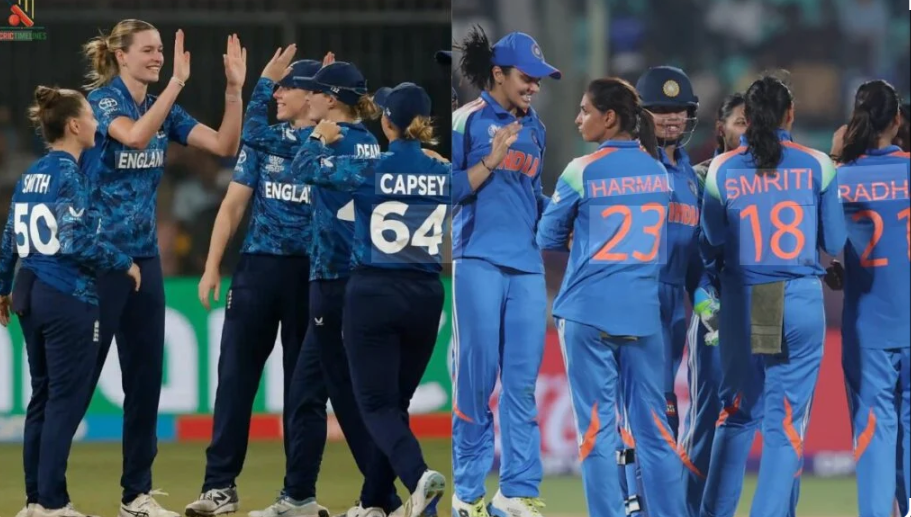
The rivalry between England Women and India Women has grown into one of the most compelling stories in international cricket. What began as one-sided encounters gradually transformed into closely fought battles filled with intensity, tactical depth, and emotional moments. Over the years, both teams have developed distinct identities, with England relying on structure and consistency while India brings flair and fearless aggression. From early tours to ICC tournaments, every clash has added a new layer to this timeline. Fans from both nations eagerly follow each meeting, knowing that the outcome often depends on small moments that define the direction of the game.
Latest Matches Table
Match Date
Match Format
Venue
Winner
Margin
19 October 2025
ODI
Holkar Stadium, Indore
England Women
England won by 4 runs
25 September 2025
ODI (Warm-up)
BCCI Centre of Excellence, Bengaluru
England Women
England won by 152 runs
22 July 2025
ODI
Banks Homes Riverside, Chester-le-Street
India Women
India won by 13 runs
19 July 2025
ODI
Lord’s Cricket Ground, London
England Women
England won by 8 wickets
16 July 2025
ODI
Utilita Bowl, Southampton
India Women
India won by 4 wickets
12 July 2025
T20I
Edgbaston Stadium, Birmingham
England Women
England won by 5 wickets
09 July 2025
T20I
Old Trafford, Manchester
India Women
India won by 6 wickets
04 July 2025
T20I
The Kia Oval, London
England Women
England won by 5 runs
01 July 2025
T20I
Gloucestershire Cricket Ground, Bristol
India Women
India won by 24 runs
28 June 2025
T20I
Trent Bridge, Nottingham
India Women
India won by 97 runs
All-Time Head-to-Head Record Table
Format
Total Matches
England Wins
India Wins
No Result / Drawn
Women’s Test Matches
15
1
3
11
Women’s One-Day Internationals (ODI)
77
41
34
2
Women’s Twenty20 Internationals (T20I)
35
24
11
0
Overall Combined Record
127
66
48
13
All-Time Batting Leaders Table
Player Name
Team Represented
Total T20I Runs
Highest Match Score
Batting Strike Rate
Smriti Mandhana
India Women
724
79
137.12
Danielle Wyatt-Hodge
England Women
618
124
140.65
Harmanpreet Kaur
India Women
472
70
104.83
Natalie Sciver-Brunt
England Women
468
77
151.92
Mithali Raj
India Women
409
57
112.05
All-Time Bowling Leaders Table
Player Name
Team Represented
Total T20I Wickets
Best Bowling Innings
Career Economy Rate
Katherine Brunt
England Women
23
3/11
5.82
Sophie Ecclestone
England Women
20
3/14
5.91
Deepti Sharma
India Women
16
3/24
6.12
Renuka Singh
India Women
13
5/15
6.45
Sarah Glenn
England Women
13
4/23
5.75
Early Encounters and Formation of Competitive Spirit
The early phase of meetings between England and India women shaped the foundation of a long and evolving sporting rivalry. In the beginning, England carried the advantage with better structure, stronger domestic systems, and more international experience. Their batting lineups were stable, while their bowlers maintained tight lines that often restricted scoring opportunities. India, on the other hand, entered these contests with raw talent and growing ambition. Although results initially leaned towards England, India gradually learned to adapt to pace, swing, and disciplined field setups. Each match added valuable exposure, helping Indian players understand the demands of elite international cricket. Over time, these early encounters became less about dominance and more about learning and resistance. Small partnerships, improved bowling spells, and better fielding standards began to emerge from the Indian side. These matches laid the groundwork for a rivalry that would later become far more balanced and emotionally intense.
Match Type
Early Advantage
Key Strength
India Progress
England Control
ODI
England
Batting depth
Gradual growth
Strong discipline
Test
England
Experience
Learning phase
Tactical control
Tour Series
England
Consistency
Adaptation
Field dominance
T20 Format
Balanced start
Aggression
Fast learning
Early structure
Establishing Identity Through Competitive Matches
As the rivalry matured, both teams began to define their identities more clearly on the international stage. England relied heavily on structured batting approaches and consistent bowling rotations, ensuring pressure remained constant on opponents. India, however, started building a fearless batting mindset, especially in shorter formats where quick scoring became essential. Matches during this phase were often closer, with momentum shifting multiple times within a single game. India’s middle order became more reliable, and bowlers developed variations to challenge England’s settled batting units. England still maintained an edge in terms of consistency, but India was no longer an easy opponent. Crowd interest also began to rise as matches turned unpredictable. Each contest added tension, with players showing increased emotional involvement and competitive intensity. This phase marked the transformation of the rivalry into a more serious and respected international contest.
Aspect
England Approach
India Approach
Match Impact
Rivalry Growth
Batting
Structured
Aggressive
Balanced
Increasing tension
Bowling
Consistent lines
Variation use
Competitive
Improved quality
Fielding
Highly disciplined
Improving
Key factor
Closing gap
Strategy
Controlled tempo
Adaptive play
Unpredictable
Strong evolution
Breakthrough Series and Shifting Momentum
A major turning point in the rivalry came when India began challenging England more effectively in bilateral series. These contests featured tighter finishes, higher individual performances, and a noticeable shift in confidence. Indian batters started playing longer innings under pressure, while bowlers began exploiting English weaknesses in spin-friendly conditions. England, despite their experience, faced moments where their usually reliable batting lineup struggled against disciplined Indian spells. Matches during this period often went down to the final overs, increasing excitement and pressure on both sides. Coaches from both teams emphasized tactical planning, leading to smarter field placements and better execution. The psychological balance of the rivalry began to shift slightly as India realized they could compete and win against England in crucial moments. This phase added unpredictability and intensity, making every encounter significant.
Series Factor
England Performance
India Performance
Key Moment
Outcome Pattern
Batting
Inconsistent peaks
Strong innings
Middle order stability
Close finishes
Bowling
Pace dominance
Spin impact
Pressure spells
Balanced results
Pressure Play
Experienced
Growing confidence
Final overs control
Tight margins
Strategy
Fixed plans
Flexible approach
Tactical changes
Unpredictable
Evolution of Batting Strength and Top Order Influence
Batting became one of the most defining elements of the rivalry as both teams invested heavily in top-order stability. England’s batters relied on timing, placement, and structured partnerships to build innings. Their approach focused on minimizing risk while gradually increasing scoring rates. India’s batting, in contrast, evolved into a more aggressive and dynamic style, particularly in powerplay overs. Openers and middle-order players began taking calculated risks, leading to higher scoring games. This contrast in styles created fascinating contests where control met aggression. Individual performances often decided matches, with centuries and half-centuries becoming turning points. Both teams also started producing players capable of finishing games under pressure. The rise of consistent run scorers from both sides made the rivalry more competitive and entertaining.
Batting Factor
England Style
India Style
Match Influence
Key Strength
Opening
Stable start
Aggressive start
Early momentum
Powerplay control
Middle Order
Anchoring
Flexible attack
Stability shift
Match control
Strike Rate
Moderate
High intent
Faster scoring
Pressure creation
Finishing
Tactical
Explosive
Game changer
High impact
Bowling Strategies and Tactical Discipline
Bowling strategies played a crucial role in shaping outcomes between these two teams. England’s bowling unit was built on discipline, seam movement, and consistent lengths that restricted scoring opportunities. Their bowlers often focused on building pressure through dot balls and forcing errors. India countered this with spin-heavy attacks and variation-based bowling in shorter formats. Indian bowlers learned to use slower balls, cutters, and tactical field placements to disrupt England’s rhythm. This contrast made matches highly strategic, with captains playing a key role in adjusting plans mid-game. Bowling performances frequently turned matches in unexpected directions, especially during middle overs where pressure peaked. Both teams also invested in developing death-over specialists, making final overs highly competitive and unpredictable.
Bowling Aspect
England Strength
India Strength
Match Effect
Tactical Value
Seam Attack
High control
Developing
Early pressure
Swing advantage
Spin Bowling
Support role
Key weapon
Middle control
Wicket taking
Death Overs
Structured plans
Variation use
Final tension
Game changer
Field Setup
Precision
Adaptive
Pressure build
Strategic impact
Pressure Moments and ICC Stage Encounters
When both teams met in ICC tournaments, the intensity of the rivalry reached another level. World Cup and T20 World Cup matches brought extreme pressure, where every run and wicket carried greater importance. England often relied on experience in knockout games, while India brought emotional intensity and fearless cricket. These matches were defined by close finishes, unexpected collapses, and game-changing partnerships. Players who handled pressure better often emerged as match winners. The psychological aspect of these encounters became as important as skill execution. Fans from both nations followed these games closely, creating a charged atmosphere that elevated the rivalry further. ICC stages also highlighted individual brilliance, with standout performances becoming part of cricket history.
ICC Factor
England Response
India Response
Match Pressure
Outcome Type
Knockouts
Experienced play
Emotional push
High intensity
Tight finishes
Batting
Controlled
Aggressive
High stakes
Momentum shifts
Bowling
Tactical
Variations
Pressure build
Wicket bursts
Fielding
Sharp
Improving
Critical role
Game deciding
Modern Era Balance and Equal Competition
In recent years, the rivalry has become more balanced than ever before. Both teams now possess world-class players across all departments, making every series unpredictable. England’s consistency and tactical awareness match India’s aggressive and fearless approach. Matches are now often decided by small margins, with fielding errors, run-outs, and final-over decisions playing crucial roles. Fitness levels, data analysis, and match preparation have improved significantly on both sides. The rivalry has shifted from dominance to equality, where both teams respect each other’s strengths. This modern phase represents the peak of competitiveness between the two sides.
Modern Factor
England Edge
India Edge
Match Balance
Key Influence
Batting
Consistency
Aggression
Equal
High scoring
Bowling
Structure
Variation
Balanced
Tactical play
Fielding
Sharpness
Energy
Close margin
Game impact
Preparation
Analytics
Adaptation
Equal footing
Strategic depth
Conclusion
The journey of England Women and India Women reflects the evolution of modern women’s cricket itself. From learning phases and dominant spells to balanced modern-day contests, the rivalry has continuously grown in quality and competitiveness. Both teams have pushed each other to improve in batting, bowling, and tactical execution. Today, there is little to separate them on most occasions, making every encounter unpredictable and exciting. This timeline stands as a testament to resilience, adaptation, and sporting excellence, where every match adds another chapter to a rivalry that continues to inspire future generations of cricket fans and players worldwide.