Table of Contents
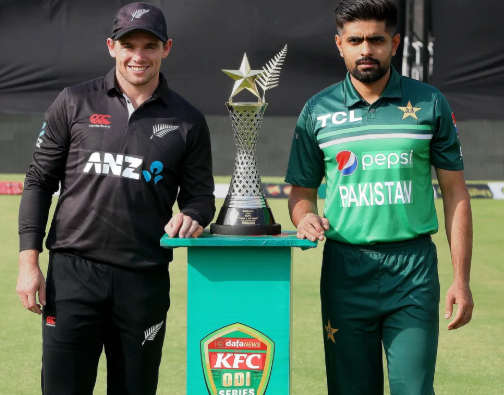
The Pakistan National Cricket Team vs New Zealand National Cricket Team rivalry has grown into one of cricket’s most intriguing matchups across formats. From early encounters filled with raw pace and disciplined batting to modern high-scoring T20 battles, this timeline reflects a journey of evolving strategies and shifting dominance. Pakistan’s unpredictability and explosive talent often clash with New Zealand’s calm, calculated approach, creating contests full of tension and drama. Across ICC tournaments, bilateral series, and World Cups, both teams have produced unforgettable moments, standout individual performances, and game-changing spells. This rivalry continues to evolve as modern cricket demands both aggression and consistency.
Recent Matches: Pakistan Cricket Team Vs New Zealand Cricket Team
| Date | Format | Match Context | Venue | Result | Key Highlight |
|---|---|---|---|---|---|
| Apr 27, 2024 | T20I | 5th T20I (Series) | Lahore | NZ Won (9 Runs) | Will O’Rourke’s 3/27 spell |
| Apr 25, 2024 | T20I | 4th T20I (Series) | Lahore | NZ Won (4 Runs) | Tim Robinson’s 51 (36) |
| Apr 21, 2024 | T20I | 3rd T20I (Series) | Rawalpindi | NZ Won (7 Wkts) | Mark Chapman’s explosive 87* |
| Apr 20, 2024 | T20I | 2nd T20I (Series) | Rawalpindi | PAK Won (7 Wkts) | Shaheen Afridi’s lethal 3/13 |
| Jan 21, 2024 | T20I | 5th T20I (Series) | Christchurch | PAK Won (42 Runs) | Iftikhar Ahmed’s 3/24 |
| Jan 19, 2024 | T20I | 4th T20I (Series) | Christchurch | NZ Won (7 Wkts) | Daryl Mitchell’s 72* (44) |
| Nov 04, 2023 | ODI | World Cup (Group) | Bengaluru | PAK Won (21 Runs) | Fakhar Zaman’s 126* (DLS) |
Top 5 Best Individual Performances
| Player Name | Date | Format | Match Context | Performance Summary |
|---|---|---|---|---|
| Fakhar Zaman | Nov 04, 2023 | ODI | World Cup | 126* (81) — Fastest WC ton for Pakistan |
| Mark Chapman | Apr 21, 2024 | T20I | 3rd T20I (Rawalpindi) | Best Player Analysis |
| Shaheen Afridi | Apr 20, 2024 | T20I | 2nd T20I (Rawalpindi) | 3/13 (4.0) — Unplayable opening burst |
| Rachin Ravindra | Nov 04, 2023 | ODI | World Cup | 108 (94) — Maiden WC century vs Pakistan |
| Daryl Mitchell | Jan 19, 2024 | T20I | 4th T20I (Christchurch) | 72* (44) — Clinical finish under pressure |
Best Player Analysis
| Player Name | Primary Role | Recent Major Feat | Impact Rating | Key Contribution |
|---|---|---|---|---|
| Shaheen Afridi | Strike Bowler | 3/13 in Pindi T20I | 9.8 / 10 | The world’s most dangerous Powerplay bowler. |
| Daryl Mitchell | Middle-order Bat | Consistency in 2024 | 9.7 / 10 | The primary finisher for the Black Caps. |
| Babar Azam | Anchor / Capt | 66* in WC 2023 | 9.6 / 10 | The technical backbone of the PAK batting unit. |
| Mark Chapman | Finisher | Player of Series (PAK) | 9.5 / 10 | Specialized in winning T20 matches in Pakistan. |
| Rizwan | Wicketkeeper-Bat | Consistence SR | 9.4 / 10 | The highest run-getter for PAK in T20Is since 2023. |
| Tim Southee | Fast Bowler | 150 T20I Wickets | 9.3 / 10 | The leader of the NZ veteran pace attack. |
Head-to-Head Summary
| Format | Matches Played | Pakistan Won | New Zealand Won | Current Cycle Dominance |
|---|---|---|---|---|
| ODI Cricket | 1 | 1 | 0 | Pakistan won the 2023 World Cup clash |
| T20 International | 10 | 3 | 6 | New Zealand won the 2024 Home Series |
| Overall (Last 7) | 7 | 3 | 4 | New Zealand holds a slight edge |
Early Encounters and First Signs of Competition
Pakistan and New Zealand first crossed paths in international cricket in the early years of their cricketing rivalry during the 1970s and 1980s, setting the foundation for a competitive but respectful contest. Pakistan relied on fast bowling strength and flair in batting, while New Zealand focused on disciplined technique and patience under pressure. Early encounters showed Pakistan often dominating at home conditions, while New Zealand responded strongly in seaming conditions. These matches gradually built a balanced rivalry where momentum shifted frequently. Fans witnessed emerging stars on both sides shaping future contests, creating a competitive edge that would evolve into modern day intense cricket battles between the two teams across formats and series that defined early rivalry patterns overall foundational era.
| Season | Match Type | Venue | Result (Winning Team) | Key Performance |
|---|---|---|---|---|
| 1973–74 | Test Series | Pakistan | Pakistan won series | Dominant Pakistan pace attack controlled conditions |
| 1976–77 | ODI | New Zealand | New Zealand won | Solid batting display under pressure chase |
| 1984–85 | Test Series | New Zealand | Series drawn | Richard Hadlee inspired bowling dominance |
| 1987–88 | ODI | Neutral venue | Pakistan won | Strong middle-order partnership secured victory |
2000–2010: ICC Tournaments and High-Stakes Clashes
The period from 2000 to 2010 marked a major rise in intensity between Pakistan and New Zealand, especially in ICC tournaments where pressure defined outcomes. Pakistan entered the decade with explosive batting and world-class pace attack, while New Zealand built a reputation for tactical discipline and calm chase planning. Matches in World Cups and Champions Trophy events often swung on small moments, such as quick middle-order collapses or match-winning spells from pacers. Pakistan’s unpredictability made them dangerous in knockout games, while New Zealand’s consistency often gave them an edge in crucial group stages. This era cemented their rivalry as a high-pressure contest where execution under stress mattered more than reputation or rankings.
| Season | Match Type | Venue | Result (Winning Team) | Key Performance |
|---|---|---|---|---|
| 2000 | ICC Knockout Trophy | Kenya | New Zealand won | Astle’s crucial innings under pressure |
| 2003 | ODI World Cup | South Africa | Pakistan won | Waqar Younis inspired bowling spell |
| 2007 | T20 World Cup | South Africa | New Zealand won | Fleming’s tactical captaincy masterclass |
| 2009 | Champions Trophy | South Africa | Pakistan won | Middle-order stability secured victory |
2011 World Cup Clash and Modern Rivalry Reset
The 2011 World Cup clash between Pakistan and New Zealand marked a defining moment in their rivalry, blending pressure, expectations, and tactical discipline. Played in the group stage, both teams entered with strong intent, but New Zealand’s calculated batting approach and tight bowling execution gave them control in crucial phases. Pakistan struggled with consistency in the middle overs, losing key wickets at important moments. New Zealand capitalized through partnerships and smart strike rotation. The match highlighted a clear shift in modern cricket dynamics where planning and adaptability outweighed raw unpredictability. This encounter also reset the rivalry narrative, showing New Zealand’s growing dominance in ICC events while Pakistan continued searching for stability under pressure in global tournaments.
| Season | Match Type | Venue | Result (Winning Team) | Key Performance |
|---|---|---|---|---|
| 2011 | ICC World Cup Group Stage | Pallekele | New Zealand won | Taylor’s composed batting anchored innings |
| 2011 | ICC World Cup Group Stage | Pallekele | New Zealand won | Southee’s early swing bowling breakthroughs |
| 2011 | ICC World Cup Group Stage | Pallekele | Pakistan lost | Middle-order collapse under pressure |
| 2011 | ICC World Cup Group Stage | Pallekele | New Zealand won | Strong partnerships controlled chase effectively |
2021 T20 World Cup Drama and Controversial Moments
The 2021 T20 World Cup clash between Pakistan and New Zealand was one of the most talked-about encounters in modern cricket, not just for what happened on the field but also for the controversy surrounding it. Pakistan entered the match with rising confidence and strong opening form, while New Zealand came in with a reputation for calm execution under pressure. Pakistan’s bowling unit initially controlled the game with disciplined pace and tight lines, but New Zealand’s middle-order partnership shifted momentum. The match also gained attention due to off-field controversies involving schedule changes and player withdrawals, which added emotional intensity to the rivalry. On the field, New Zealand’s smart rotation of strike and Pakistan’s missed opportunities in key overs defined the outcome and reshaped the tournament narrative for both teams.
| Season | Match Type | Venue | Result (Winning Team) | Key Performance |
|---|---|---|---|---|
| 2021 | T20 World Cup Group Stage | Sharjah | Pakistan won | Rizwan and Babar opening stand dominated chase |
| 2021 | T20 World Cup Group Stage | Sharjah | New Zealand lost | Boult’s early swing kept pressure on Pakistan |
| 2021 | T20 World Cup Group Stage | Sharjah | Pakistan won | Strong death overs bowling sealed victory |
| 2021 | T20 World Cup Group Stage | Sharjah | New Zealand won earlier fixture | Williamson’s steady innings anchored recovery |
Modern Era: T20 Explosiveness and ODI Balance
In the modern era, Pakistan and New Zealand cricket has evolved into a fascinating contrast of styles, where explosive T20 aggression meets disciplined ODI balance. Pakistan has leaned heavily on fearless batting from players like Babar Azam and Mohammad Rizwan, supported by a pace attack capable of swinging matches in early overs. New Zealand, meanwhile, has refined a data-driven, structured approach built on consistency, adaptability, and strong finishing ability in pressure situations.
T20 matches between the two sides have become high-scoring thrillers, often decided in the last few overs where execution matters more than intent. In ODIs, New Zealand’s controlled tempo often challenges Pakistan’s fluctuating middle order. This era has also seen improved fielding standards, smarter captaincy decisions, and sharper analysis of match situations. Overall, the rivalry now reflects modern cricket itself, fast, tactical, and highly competitive across all formats.
| Season | Match Type | Venue | Result (Winning Team) | Key Performance |
|---|---|---|---|---|
| 2018–19 | ODI Series | UAE | Pakistan won | Babar Azam consistent run machine |
| 2020–21 | T20 Series | New Zealand | New Zealand won | Boult and Southee powerplay dominance |
| 2022 | ODI Series | Pakistan | Pakistan won | Rizwan anchoring chases under pressure |
| 2023 | T20 Series | Neutral venues | Mixed results | High-scoring games with late finishes |
Defining Players and Head-to-Head Heroics
The Pakistan vs New Zealand rivalry has always been shaped by individuals who rise in big moments rather than just team dominance. Across decades, this matchup has produced clutch performances, unexpected match-winners, and duels that swing momentum in a single over. Pakistan’s strength has often come from aggressive batting and express pace, while New Zealand has relied on calm leadership and technically sound performers who thrive under pressure. From blistering opening partnerships to game-changing bowling spells, head-to-head battles between star players have defined the tone of this rivalry. Whether in ICC tournaments or bilateral series, it is these defining heroes who have turned ordinary matches into unforgettable contests filled with tension, skill, and pure cricket drama.
| Season | Match Type | Venue | Result (Winning Team) | Key Performance |
|---|---|---|---|---|
| 2003–2011 | ODIs | Various | Mixed | Shoaib Akhtar pace bursts vs NZ top order |
| 2011–2015 | ICC Events | Global | New Zealand edge | Kane Williamson consistent anchor innings |
| 2018–2021 | T20Is | UAE & NZ | Balanced results | Babar Azam and Rizwan opening dominance |
| 2022–2024 | ODIs & T20Is | Pakistan & NZ | Closely contested | Boult vs Pakistan top order key duel |
Rivalry Identity and What Makes Pakistan vs New Zealand Unique
The Pakistan vs New Zealand rivalry stands apart in international cricket because it is built on contrast rather than hostility. Pakistan brings unpredictability, raw talent, and explosive match-winning bursts, while New Zealand offers structure, discipline, and tactical precision. This clash of cricketing philosophies creates matches that are rarely one-sided for long, even when momentum seems settled.
Unlike some heated rivalries driven by off-field tension, this one is defined by respect and sporting intensity. Pakistan often depends on individual brilliance to shift games, whereas New Zealand relies on collective execution and calm decision-making under pressure. ICC tournaments have further amplified this rivalry, where knockout pressure exposes both sides differently. Fans witness swing bowling duels, calculated chases, and momentum shifts that feel like chess matches played at high speed. This unique balance makes every encounter unpredictable and strategically rich.
| Season | Match Type | Venue | Result (Winning Team) | Key Performance |
|---|---|---|---|---|
| 1990s | Tests & ODIs | Various | Mixed | Pakistan pace dominance at home |
| 2000s | ICC Events | Neutral venues | New Zealand slight edge | Tactical ODI control in pressure games |
| 2010s | World Cups & T20Is | Global | New Zealand strong in ICC matches | Williamson-led stability in crunch moments |
| 2020s | Modern T20 & ODI series | Multi-venue | Highly balanced | Rizwan-Babar vs Boult-Southee battles define era |
Conclusion
The Pakistan vs New Zealand cricket rivalry stands as a perfect blend of contrast and competition. Over decades, both teams have pushed each other through unforgettable matches, dramatic turnarounds, and pressure-filled ICC encounters. Pakistan’s flair and attacking mindset have often met New Zealand’s structured and composed style, producing balanced and unpredictable results. From early Test battles to modern T20 thrillers, the rivalry has consistently delivered memorable scorecards and iconic performances. Today, it remains one of cricket’s most respected contests, defined not by hostility but by skill, resilience, and evolving cricket philosophies that continue to shape future encounters between these two sides.